
Key Takeaways
- Begin each project with clear ideas and talks. Early talks with experts help match your vision with real goals.
- Use detailed drawings and rules to guide your work. Good plans stop mistakes and keep everyone safe during building.
- Pick the best cutting and bending ways for steel. Using new machines like CNC helps make work more exact and fast.
- Do quality checks all through the process. Regular checks make sure each part is safe and fits right.
- Cover steel with special coatings to make it last longer. Coatings stop rust and harm, so you save money on fixes later.
Concept Development and Planning
Idea Generation and Consultation
You start every custom steel structure design and fabrication project by thinking of ideas. You talk with engineers or architects about what you want. These early talks help you know what to expect. You look at different designs and discuss how you will use the structure. This step makes sure your ideas fit the project and budget.
Tip: Meeting early helps you stop mistakes later. You can ask questions and get help from experts.
Here is how first meetings help your project do well:
| Step | Description |
|---|---|
| 1 | Talk a lot to learn about the project |
| 2 | Listen to what the client wants and look at designs |
| 3 | Make sure the project matches the client’s ideas |
You can use these good planning tips:
- Work with smart engineers to see if your building can grow later.
- Add special things like mezzanine floors or energy-saving systems.
- Save money by using ready-made kits and local materials.
- Try new ideas like modular construction or smart technology.
Feasibility and Initial Design
After you set your goals, you check if your ideas will work. You see if your plan fits your location, budget, and time. You look at framing choices like steel, concrete, or wood. You pick the best one for your project.
| Criteria | Description |
|---|---|
| Project Reviews | Look over project rules, drawings, and details. |
| Structure Assessments | Study framing choices to find the best one. |
| Preliminary Budgeting | Figure out early costs for materials. |
| Estimates & Pricing Options | Get quotes with different choices. |
| Proposals & Presentations | Use special tools and pictures for showing your project. |
You start with a simple plan and find any problems. Simple designs cost less and are faster to build. Hard shapes or special features need more skilled workers and materials, so they cost more and take longer. You choose a simple or fancy structure based on your needs and budget.
Note: Planning well now helps you stop delays and extra costs later in the custom steel structure design and fabrication process.
Custom Steel Structure Design and Fabrication Process
Design Drawings and Specifications
You start by making detailed drawings for your project. These drawings show every part you need. They help you see how steel pieces fit together. You use them to plan the size and shape of beams and columns.
| Type of Drawing | Purpose |
|---|---|
| General Arrangement (GA) | Shows where steel members go in the structure. You get a top and side view. |
| Assembly and Erection Drawings | Give steps for putting steel parts together. |
| Fabrication Drawings | Show sizes, cutting lines, and welding marks for each piece. |
| Connection Information | Tell how steel parts join, like welding or bolting. |
| Material Specifications | List steel grade, type, and finish. They follow rules for quality. |
Drawings help you follow safety rules and building codes. You use them to check sizes and make sure parts fit. Shop drawings give clear steps for welding and bolting. They help you pick the right materials. You use these plans to guide your team and stop mistakes. Quality checks make sure drawings meet all standards.
Tip: Good drawings help you build strong steel structures. They make your work faster and more correct.
Cutting and Shaping Steel
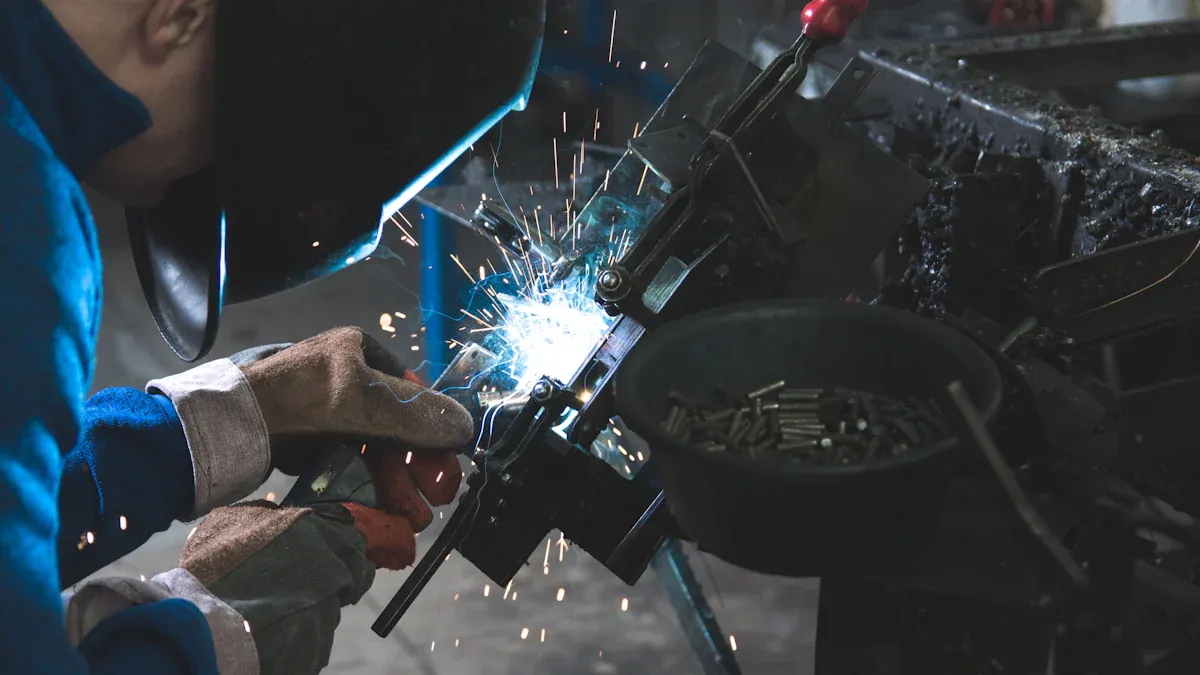
After you finish drawings, you cut and shape steel. You use machines like CNC systems for this job. CNC machines use computers to cut steel exactly right. The machine cuts each piece to the size you need. Robots and automation help you work faster and safer. These tools lower mistakes and save time.
You must follow strict limits when cutting steel. Limits are small rules for size and shape. They make sure every piece fits well. Here are some common limits:
- Dimensional Tolerances: Control length, width, height, and thickness.
- Flatness Tolerances: Keep steel plates flat and stop warping.
- Straightness Tolerances: Make beams and bars stay straight.
- Squareness Tolerances: Help corners and edges fit together.
- Camber and Sweep Tolerances: Control curves in beams.
You use new technology to do better work. CNC machines and robots give you the same results every time. They help you waste less and keep costs low. You can also use smart ways to arrange parts and save material.
Forming, Bending, and Welding
You shape steel using different bending methods. Press brake bending uses machines to make sharp bends. Roll bending makes curves by rolling steel. Hammer forging shapes steel with force. Cold rolling bends long strips for big jobs. Hot bending heats steel before shaping. Rotary-draw bending makes tight curves. Induction bending uses heat for exact shapes.
| Bending Method | Description |
|---|---|
| Press Brake Bending | Uses presses to bend steel sheets and plates. |
| Roll Bending | Rolls steel to make curved shapes. |
| Hammer Forging | Uses force to shape steel. |
| Cold Rolling | Bends long strips for big jobs. |
| Incremental Bending | Uses point loads for big curves. |
| Hot Bending | Heats steel before bending. |
| Rotary-Draw Bending | Makes tight curves with a die. |
| Induction Bending | Heats steel for exact shapes. |
Bending is needed for beams, brackets, and other shapes. You pick the best method for each part of your custom steel structure design and fabrication project.
Welding joins steel pieces together. Skilled welders make strong joints. Good welding keeps your structure safe. Bad welding can cause cracks or weak spots. You must watch for problems like porosity, incomplete fusion, and slag inclusion. These problems make welds weaker.
- Porosity makes welds crack when stressed.
- Incomplete fusion makes weak joints.
- Cracks can cause sudden breaks.
- Slag inclusion lowers weld strength.
Welding mistakes cause many errors in fabrication. About 40% of failures come from bad welding. You must check every weld and use the right ways. Robots and automation help you weld faster and better. Skilled welders change their methods for each job.
Note: Strong welds and good bends help your custom steel structure design and fabrication project last longer and stay safe.
You face problems like heavy loads, bad weather, and small spaces. You fix these by using strong welds, protective coatings, and smart designs. Technology helps you work faster and save money. You use planning, skilled workers, and new machines to get the best results.
Assembly, Surface Treatment, and Installation
Component Assembly and Quality Checks
You begin by reading the instructions with your team. You get the site ready and check all steel parts. The frame is built using I-beam columns and rafters. Girts, purlins, and framed openings are added for support. Walls and roof panels are put on last.
- Read the plans and instructions.
- Gather your team for assembly.
- Get the site ready and follow rules.
- Find and check all steel parts.
- Build the frame with columns and rafters.
- Add girts, purlins, and openings.
- Finish with walls and roof panels.
Each steel piece is put in place and joined with bolts or welds. You check if everything is straight and lined up. You fix any problems before moving forward.
| Quality Control Measure | Description |
|---|---|
| Dimensional Inspection | Make sure all parts are the right size. |
| Weld Quality Testing | Test welds to see if they are strong. |
| Material Certification | Track materials and check standards. |
| Final Inspection | Look over the finished structure before shipping. |
Tip: Careful building and checking help you avoid mistakes and keep your structure safe.
Surface Coating and Protection
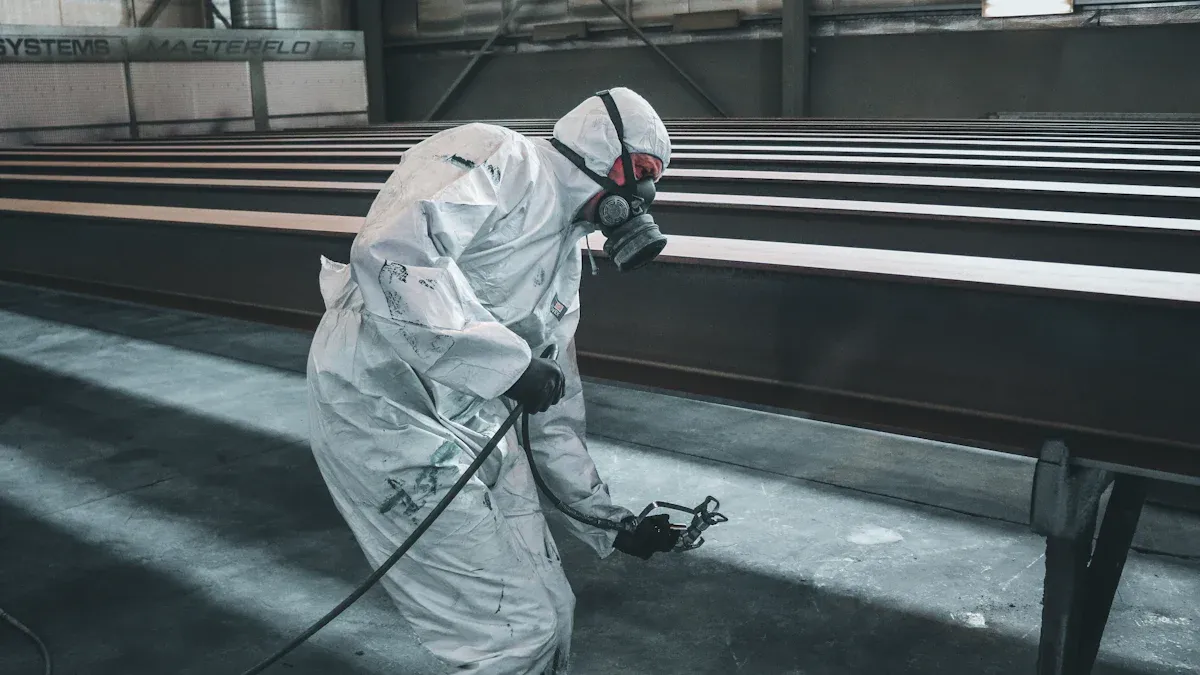
Steel is protected by adding special coatings. Zinc coatings stop rust and keep steel strong. Inorganic zinc works well in hot places and gives extra protection. Organic zinc is easy to use and fits many jobs. Galvanization keeps steel from rusting for a long time and is used for bridges and poles. Powder coating does not chip easily and looks nice on buildings. Anodizing makes steel last longer in tough places. Painting is cheap and comes in many colors. Thermal spraying protects steel in very hard conditions.
| Type of Coating | Benefits | Common Applications |
|---|---|---|
| Galvanization | Stops rust, lasts long, saves money | Bridges, utility poles |
| Powder Coating | Does not chip, good for the planet, many looks | Architecture |
| Anodizing | Lasts long, sticks well, looks nice | Hard places |
| Painting | Cheap, easy, many colors | General structures |
| Thermal Spraying | Strong against rust and wear, good for tough jobs | Aerospace, offshore |
These coatings help steel last longer and need less fixing. They keep away rust and protect from weather and damage.
Transport and On-Site Installation
Big steel parts are moved by train for long trips. Heavy pieces are loaded first and lifted with cranes or forklifts. Straps and chains hold everything in place. You plan the trip and get permits for big loads. Drivers are trained and weather is checked. The team talks often to keep things safe.
- Use trains for big steel parts.
- Make sure trucks can reach the site.
- Load heavy parts first for balance.
- Hold parts with straps and chains.
- Plan the trip and get needed permits.
- Train drivers and check safety rules.
- Watch the weather and have a backup plan.
- Talk with your team often.
At the site, you follow safety rules when installing steel. Special tools are used for cutting and bending. Welders wear shields and gloves. Lifting gear is checked and no one stands under loads. Workers use harnesses and guardrails when working high up. Everyone wears helmets, gloves, boots, and bright jackets.
| Safety Measure | Details |
|---|---|
| Cutting and Bending | Use safe tools, keep space, trained workers, fire safety ready |
| Welding Precautions | Wear shields, gloves, fireproof clothes, air flow, fire watchers |
| Lifting and Rigging | Check weights, safe gear, do not stand under loads, check often |
| Working at Heights | Use harnesses, lifelines, guardrails, safe shoes, train workers |
| PPE Requirements | Helmets, gloves, boots, jackets, ear protection |
Good planning helps you follow rules and keep everyone safe. Talking with engineers, builders, and managers makes your custom steel structure design and fabrication project strong and smooth.
If you know each step in custom steel structure projects, your team can build safer buildings. Careful planning, clear drawings, and talking with your team help you get better results. The table below shows how every stage helps:
| Step | Benefit |
|---|---|
| Design and Planning | Makes sure the building is safe and meets goals |
| Fabrication | Makes parts that fit together easily |
| Surface Treatment | Keeps steel strong and helps it last longer |
| Assembly | Makes building faster and more correct |
| Inspection | Checks if the building is strong and safe |
You can see these steps in real jobs, like Villawood Homes in Australia. Good planning made building go faster and cost less. Always plan well and talk with your team to do your best work.
FAQ
What is the most important step in custom steel structure design?
You need to focus on planning and design. Good planning helps you avoid mistakes. Clear drawings show you how to build each part. This step makes your project safe and strong.
How long does it take to fabricate a steel structure?
You can expect most small projects to take a few weeks. Large or complex buildings may take several months. Your timeline depends on design, material supply, and weather.
Why do you need surface coatings on steel?
- Surface coatings protect steel from rust.
- They help your structure last longer.
- Some coatings also make steel look better.
How do you make sure steel parts fit together?
| Step | What You Do |
|---|---|
| Measure | Check each part’s size |
| Inspect | Look for damage or mistakes |
| Test Fit | Try parts before assembly |
You check every piece before building. This helps you avoid problems later.