Businesses and commercial real estate developers in 2026 find themselves with a common question: Why should they continue using traditional methods of constructing buildings, which require many months of hard work and can have unpredictable costs, when faster and more reliable ways exist? The advantages that prefab steel buildings provide over the traditional methods of construction are too obvious to ignore now that we live in a time where material prices are constantly changing and projects take less and less time to complete. Because of this, steel buildings now represent a higher percentage of new commercial, agricultural, and industrial building projects across North America and they’re not just being selected for their lower price. Regardless of whether you’re looking to build a warehouse, retail store or manufacturing plant — knowing the benefits of prefabricated steel buildings in terms of real, tangible numbers can drastically alter your method of construction. This isn’t just hype from a steel manufacturer’s brochure; these are real benefits that you’ll continue to see in your balance sheets, project schedules, and building inspections for years after you choose a prefabricated steel building over something built traditionally!
The Development of Steel Structures in the Modern Era.
Steel construction is definitely not a new concept at all. The first buildings constructed with iron frameworks were developed in the 19th-century, and steel has been used as the principal material in the construction of most skyscrapers since the early 20th-century. The major changes that have occurred in recent years are the advancements made in the way that steel is fabricated, and the quality of the design software utilized for the development of the prefabricated steel structures used today.
Steel prefab construction is presently designed by the use of three-dimensional computer modeling software that will take into account none of the loads placed on the building, the building code requirements in place, wind and seismic conditions, and the energy standards of construction. In 2026, most top manufacturers will use BIM to design all projects. When the final building is delivered, it comes in as a kit of parts, all cut, drilled, and labeled for the right location.
The time it takes to deliver projects has been significantly shortened due to this system; and mistakes are also much fewer as well. It is also makes it possible to design projects in ways that were not feasible before. The method of making things using steel at factories is very different than traditional ways of building such as wood and concrete blocks, and it continues to become more and more different as time goes on.
The unmatched pace and efficiency of installation, combine to make it a winning combination.
Time is cash at a building site and prefab steel buildings consistently deliver quicker completion of projects. The average 10,000-sq.-ft. steel building may be built from foundation to weather tight in just 4-6 weeks. A similar wood or masonry building may take 3-5 months to build.
Pre-Engineered Accuracy and Less Labor required on the building site.
With the controlled factory- fabricated steel members and their specifications being produced in the factory, there is very little cutting, welding or custom fabrication on site required. Erectors are provided the actual plans and instruction of where each piece goes. This will reduce the number of skilled trade workers needed on site at any time and therefore, reduce the labor cost of the project. A crew of 4 to 6 professional steel erectors are able to produce a mid-sized steel building frame in days as compared to masonry which would require masons, carpenters, concrete finishers to work in sequential order for months.
Weather Delays and Construction Projects
Heavy rain and snow can cause significant construction delays. It is very difficult to pour concrete when the temperature drops below 32 degrees Fahrenheit. In traditional stick-built construction, framing lumber is very susceptible to moisture, which can cause the wood to swell or warp during the framing process. Fabricated Steel is produced indoors, ready to assemble, and therefore avoids much of the weather-related issues that can arise during traditional construction. Because of the weather-resistant nature of Fabricated Steel, they enable contractors to continue working in inclement weather conditions that would shut down a traditional job site. Moreover, the ability to rapidly install the exterior envelope allows the building to be enclosed before the weather becomes an issue.
Major Financial Savings & Cost Certainty
Prefab steel represents a massive benefit on the financial side through Cost Certainty. Most traditional construction projects far exceed their initial budget numbers. a CIOB survey from 2025 showed 85% of commercial construction projects had budget overruns. Prefabricated steel structures, however, are the complete opposite to most traditional construction budgets.
Lower Waste & Lower Disposal Costs
Factory-based manufacture implies the cutting of materials by CNC manufacturing techniques and produces minimal waste. In an average wood-frame constructed project, waste can range from 10 per cent to 15 per cent of the total material purchased. In contrast, virtually all offcuts of steel are internally recycled in a steel fabrication facility. Therefore, there will be significantly fewer packages and less debris and waste for hauling on the jobsite. On a $20,000 square-foot project, the waste disposal cost savings would range from $5,000 to $15,000 depending upon the local landfill fees.
*
Long-Term Insurance and Maintenance Reductions*
Steel buildings have lower insurance costs than other construction types because they are non-combustible and resistant to many hazards that threaten other types of buildings. Insurance companies generally charge 20-40% less for steel-framed structures than wood-framed buildings from the same insurer. Maintenance is significantly cheaper on steel-framed buildings as well: you won’t need to keep painting or replacing rotted wood, and you won’t have to repair or replace termite damaged framing. Plus, you won’t have to fix cracked mortar joints either. If you own a commercial property for a typical 30-year life cycle, your savings from these lower insurance and maintenance costs will likely amount to a six-figure total for most commercial properties.
The durability of steel and the high integrity of its structure mean a nearly indestructible building.
Buildings are generally considered as long-term investments, therefore durability will dictate/define the value of the building purchased. Steel buildings are constructed with a strength-to-weight-ratio greater than any other commonly used building material. As a result, the amount of steel required to create a structure (of any size) will allow for greater spans of distance utilizing less material, and the result will be a building that has equal if not greater load carrying capacity than a building could with heavier materials.
Resistance to Pests, Rot, and Fire Hazards
Termites are responsible for an estimated annual property damage of over $5 billion in the United States. Steel is not only resistant to all termite damage, but also resistant to damage from wood-boring insects and fungi (rot). It does not rot, warp or split. Steel is noncombustible from a fire-safety standpoint and will retain its structural integrity at temps which would cause a wood-framed building to fail completely. At extremely high temperatures (approximately 1100ºF) steel will start to lose its strength but with fire-resistant coatings and insulation, this temperature limit is considerably increased. Steel framing is being required by building codes in many areas today in commercial applications because of these properties.
Facing severe weather and earthquakes
Pre-fabricated steel buildings are engineered to meet the wind loads, seismic categories and snow loads applicable to the geographical location of where the building is being constructed. Steel buildings constructed in Coastal Florida will be engineered with different bracing systems and connection details than would a steel building constructed in Montana even though they will both be constructed from steel which is very flexible and has great tensile strength. Steel’s flexibility in an earthquake allows it to bend without breaking, making it superior to masonry or concrete buildings in earthquake zones. Properly connected “Hurricane” rated steel buildings have demonstrated excellent survival rates in the past category four and five hurricanes, while many adjacent traditional buildings experienced catastrophic damage.
Design versatility and scalability for the future
It is an ongoing misconception that steel buildings have virtually no uniqueness in terms of their appearance; they all just resemble metal boxes basically. That misconception has not held true for several decades now. The modern prefab steel structures will allow designers to choose from basically an unlimited number of exterior finishes for their building, which includes not only brick veneer but stucco, glass curtain walls, wood accents, or any combination of these and many others that a designer could specify.
Clear-Span Interiors for Maximum Usable Space
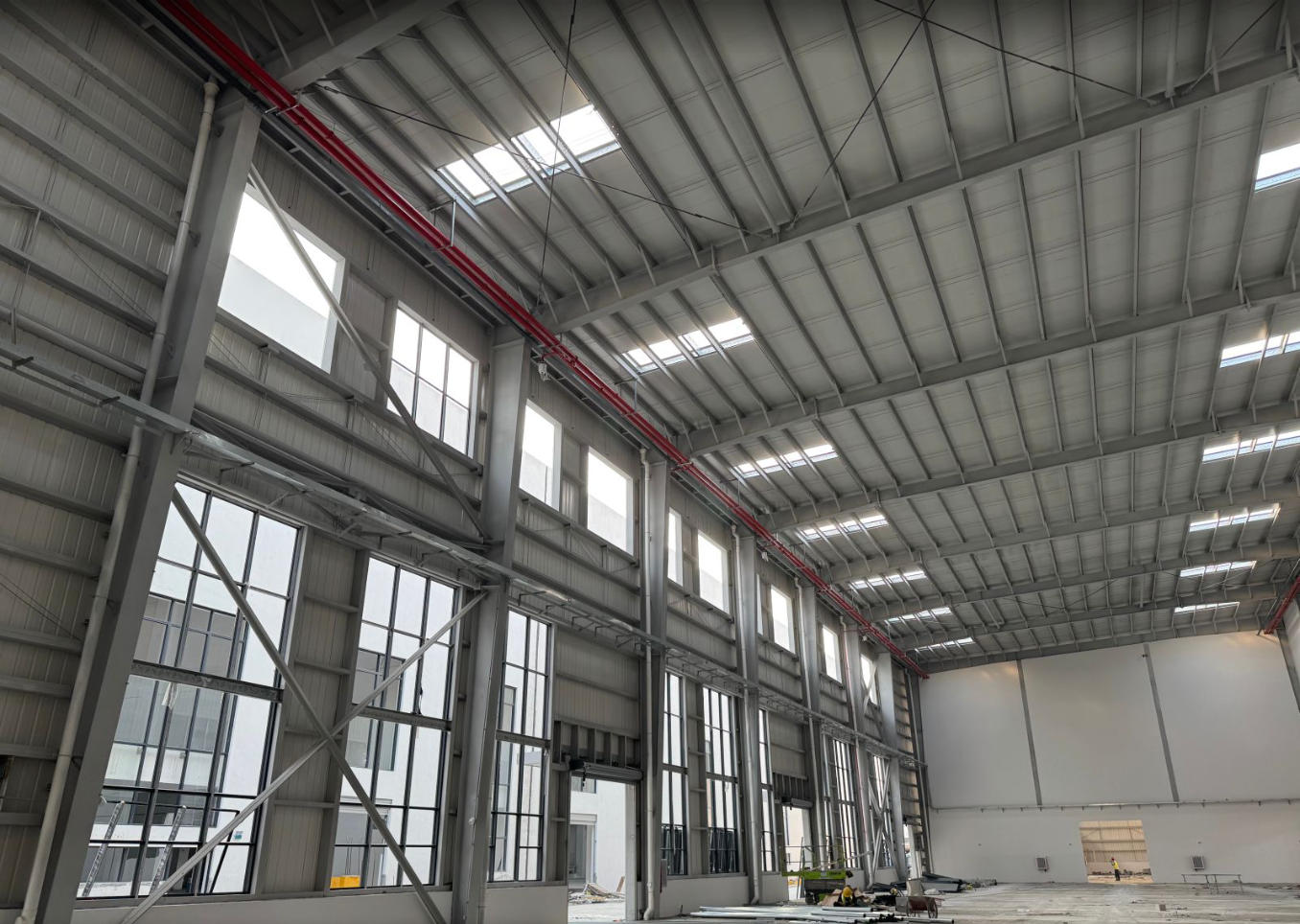
Functional aspects and advantages of steel as a construction material provide forces of productivity that generate large interior spaces without the need for columns. Standard pre-engineered steel buildings are designed with large open spans of over 200 feet. Compare this with wood framing or load-bearing masonry construction, and you will find it difficult to achieve the same span without either adding columns, using expensive engineered-wood trusses which take up space, or adding load-bearing walls. Warehouses, aircraft hangars, sports facilities, retail showrooms and manufacturing facilities all require large clear spans; therefore, this attribute of steel construction is not just desirable but essential to their functionality at a very cost-effective building expense.
Making it easier to grow your business is key.
Businesses change, and so must their facilities. Because of their flexibility, steel structures are designed for future expansion, i.e., it is mean to extend a wall or add a bay. An engineer can design for future expansion through detailing endwall framing that may be removed and extended at later dates. At the opposite end of the spectrum lies concrete block building types which are usually constructed to be fully complete when built and thus require demolition/removal of one entire side of the building to construct an addition, requires new foundations, and involves major changes to the structure. The construction period for an extension is frequently less than half as long as the period for an addition to be constructed with steel.
Environmental Sustainability
Over the years, sustainability has become an important part of various regulatory requirements, moving beyond being a simple buzzword. Steel construction provides an excellent fit with Green Building Standards. There is supporting data to confirm this.
Recyclability of Steel Components
Steel is the most recycled material in the world. Over ninety percent of all structural steel taken from demolished buildings is recycled and most newly produced steel contains at least twenty five to thirty five percent recycled material. A steel building’s useful lifespan can exceed 50 years if well-maintained. After it has reached the end of its useful lifespan, the steel frame can be disassembled and recycled with absolutely no down cycling involved. In contrast to that, wood is generally sent to a landfill after demolition. Concrete can be recycled but the process is very energy intensive and results in an aggregate that is of lower value than the original concrete. Projects that seek LEED certification and/or other green building credentials are therefore rewarded for the use of recycled steel in those projects because it contributes meaningful points toward achieving LEED certification.
Better Insulation Methods and Keeping Warm
Steel structures received criticism for being overly warm during the summer months and being very cold in the winter season. That situation has now changed. Modern insulation systems that are manufactured for use in metal buildings, including insulated metal panels (IMPs), and spray foam, and fiberglass blanket systems with thermal breaks, provide R-values that comply with or surpass todays energy codes. IMPs are a popular option because of the way they incorporate insulation, a vapor barrier and a fully finished interior surface all into one single panel. Steel structures built in 2026, if they are well insulated, will be able to match or surpass the energy efficiency of any conventionally framed structure, and will often do so at a lower installed cost for the entire wall or roof assembly.
Selecting a Construction Approach for Your Building
The benefits of prefabricated steel buildings as compared with traditional construction methods in almost every important measure; speed, costs, durability, flexibilty, and environmentally responsible construction. But, each project is unique in its requirements. Some examples of things that will influence your final decision include site conditions, local zoning requirements, aesthetic preferences, and budgetary limitations.
If you are considering building a new commercial, industrial or agricultural building, I suggest that you start by obtaining quotes from a company that manufactures pre-engineered steel buildings and a general contractor who has experience in conventional construction methods. When you have obtained quotes from both companies, compare the costs provided by each company (both initial and long term costs), the timeframes for completion, the maintenance that will be required, the impact on your insurance costs, and the ability to change the use of the building over time. In most cases the steel building will provide you the best “total cost of ownership” which will be considerably less than the other building method(s).
The construction business is embracing using prefabricated structures because of their numerous advantages. Prefab steel buildings are associated with measurable benefits which accumulate over the building’s life cycle. The significant benefit of prefabricated steel buildings is that their advantages will last throughout the life cycle of a building and thus, every year will increase the accumulated value. Therefore, whether you are a first-time builder or a fifth-time builder, you should weigh your options before selecting an alternate construction method that will be more costly, less reliable, and less profitable than prefabrication steel buildings.