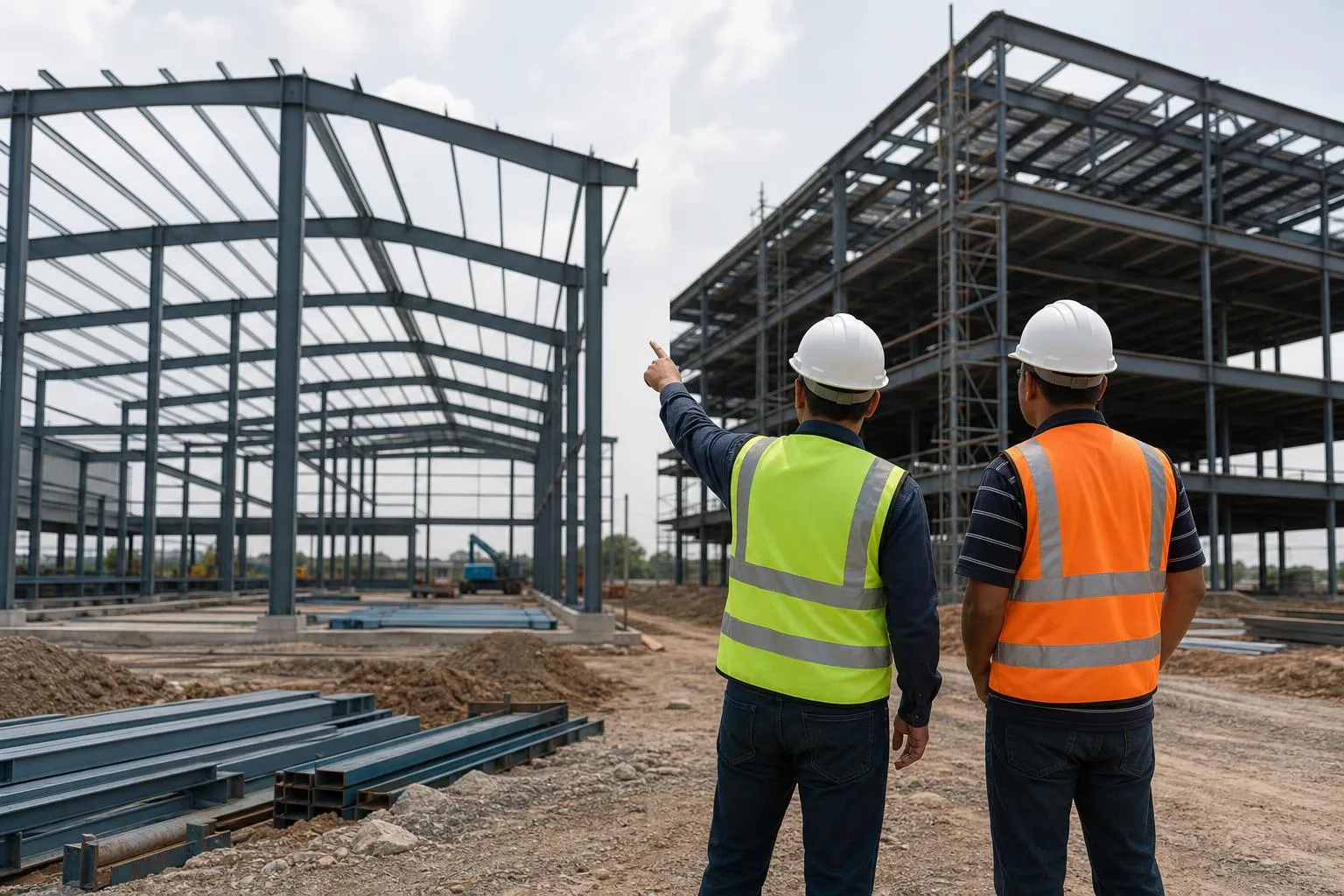
Every year, thousands of commercial and industrial projects face the same fork in the road: should the building go up as a pre-engineered metal structure or a conventionally fabricated steel frame? The answer shapes everything from your budget and timeline to how the building performs twenty years from now. Most advice online oversimplifies the choice, treating it as a binary where one option is always superior. That is not how real projects work. The best decision depends on your specific span requirements, aesthetic goals, site conditions, and long-term plans. What follows is an honest comparison, built on how these two systems actually differ on the ground, so you can match the right structural approach to your project instead of guessing.
Defining Pre-Engineered and Conventional Steel Systems
Before comparing costs, timelines, or performance, you need a clear picture of what each system actually is. The terms get thrown around loosely in the industry, and misunderstanding them leads to bad procurement decisions. Both rely on steel as the primary structural material, but their design philosophies, manufacturing processes, and on-site assembly methods are fundamentally different.
The Engineering Behind Pre-Engineered Metal Buildings (PEMB)
A pre-engineered metal building is designed and fabricated as a complete system by a single manufacturer. The manufacturer runs your project parameters (span, load, wind speed, snow load, seismic zone) through proprietary software that optimizes every member for minimum weight while meeting code. Primary frames are typically tapered I-beams, which use material only where bending moments demand it, reducing steel tonnage by 20-30% compared to uniform sections.
All components, including purlins, girts, wall panels, roof sheets, trim, and fasteners, arrive at your site ready to bolt together. There is no field welding on the structural frame. Think of it like a giant kit: engineered off-site, manufactured to precise tolerances, and erected with a relatively small crew.
Characteristics of Conventional Structural Steel Fabrication
Conventional steel construction starts with an architect and structural engineer designing a building from scratch using standard hot-rolled sections (W-shapes, HSS tubes, angles, channels). A steel fabricator then cuts, welds, and drills these members per the engineer’s drawings. The fabrication shop and the design team are usually separate entities.
This approach gives the design team total control over member selection, connection details, and geometry. There are no constraints imposed by a manufacturer’s standard product line. The trade-off is that every connection, every brace, and every detail must be individually detailed, fabricated, and inspected, which takes more time and coordination.
Design Flexibility and Aesthetic Potential
Architectural Freedom in Conventional Construction
If your building needs curved roof lines, cantilevered sections, irregular floor plans, or multi-story configurations with complex load paths, conventional steel is almost always the right call. Hospitals, high-rise offices, retail centers with dramatic facades, and mixed-use developments rely on conventional framing because the geometry demands it.
Conventional steel accepts any cladding system: curtain walls, brick veneer, precast panels, or architectural metal. There is no inherent limitation on the exterior expression, which is why most architect-driven projects default to conventional framing. The steel is simply the skeleton; the skin can be anything.
Standardized Efficiency vs. Custom Modifications in PEMB
Pre-engineered buildings have a reputation for looking like metal boxes, and honestly, that reputation was earned decades ago. Modern PEMB manufacturers in 2026 offer a much wider range of options: standing-seam roofs, insulated wall panels in multiple profiles, fascia systems, canopies, and even hybrid designs where a PEMB frame sits behind a masonry or stucco exterior.
Still, there are real limits. Multi-story PEMBs exist but are uncommon and lose much of the cost advantage. Unusual geometries, like L-shaped footprints or dramatic cantilevers, often require so many custom modifications that you are effectively paying conventional-steel prices for a system not designed for that purpose. PEMBs shine brightest in single-story, rectangular, or mildly irregular footprints.
Cost Analysis and Long-Term ROI
Material and Labor Cost Comparisons
Here is where the numbers get interesting. A typical pre-engineered building in 2026 runs between $25 and $55 per square foot for the building shell (frame, roof, walls, accessories), depending on span, loads, and insulation. Conventional steel structures for comparable single-story industrial applications often land between $40 and $75 per square foot for the structural package alone, before cladding.
The cost gap comes from three places:
- Optimized member design reduces raw steel tonnage in PEMBs
- Factory production lines are faster and more consistent than custom fabrication shops
- Erection crews for PEMBs are smaller (often 4-6 workers versus 8-12 for conventional) because connections are bolted, not welded
That said, comparing pre-engineered and conventional steel buildings on shell cost alone is misleading. Once you add foundations, MEP systems, interior finishes, and site work, the PEMB advantage shrinks from 30-40% to roughly 10-20% of total project cost. For complex buildings, the gap can disappear entirely.
Maintenance and Lifecycle Expenses
Both systems use steel, so corrosion protection matters equally. PEMBs typically arrive with factory-applied paint or Galvalume coatings on panels, which hold up well for 25-40 years depending on the environment. Conventional steel requires field-applied fireproofing and paint, which can be more expensive initially but allows for higher-performance coating systems in corrosive environments like chemical plants or coastal facilities.
Roof replacement tells a different story. PEMB standing-seam roofs are relatively straightforward to re-panel. Conventional buildings with built-up or single-ply roofing over steel decking face standard commercial re-roofing costs. Neither system has a decisive lifecycle cost advantage; it depends on the specific coatings, environment, and maintenance schedule.
Timeline and Speed of Construction
The Accelerated Erection Process of PEMB
Speed is probably the single biggest practical advantage of pre-engineered buildings. A 10,000-square-foot PEMB can be erected (frame, roof, walls) in two to three weeks with a small crew. A 50,000-square-foot warehouse might take six to eight weeks for the shell.
The real time savings happen before the crew ever shows up. Because the manufacturer handles design, engineering, and fabrication as one integrated process, the gap between signing a contract and receiving materials is typically 8-12 weeks. Compare that to conventional steel, where design, engineering review, shop drawing approval, fabrication, and delivery can stretch 16-24 weeks before erection even begins.
For projects where speed-to-occupancy matters, like distribution centers needing to open before peak season or manufacturing facilities tied to equipment delivery dates, this timeline compression is worth real money.
Lead Times and On-Site Fabrication for Conventional Steel
Conventional steel projects involve more coordination handoffs. The architect produces construction documents. The structural engineer stamps them. A steel fabricator prepares shop drawings. The engineer reviews and approves those drawings. The fabricator orders raw steel, cuts, welds, drills, and paints. Then the steel ships to the site.
Each handoff introduces potential delays. A rejected shop drawing adds two to four weeks. A steel mill allocation issue can push delivery back a month. On-site, conventional erection requires certified welders for moment connections, which means weather delays hit harder because you cannot weld in rain. None of these issues are insurmountable, but they add up. Budget 6-12 months from design start to shell completion for a conventional steel building of moderate complexity, versus 4-7 months for a comparable PEMB.
Structural Performance and Scalability
Clear Span Capabilities and Interior Space Utilization
Pre-engineered rigid frames can achieve clear spans up to about 200 feet without interior columns, which covers the vast majority of warehouse, hangar, and athletic facility needs. Some manufacturers push to 250 feet or beyond with deeper frames, though costs rise steeply past 150 feet.
Conventional steel can match or exceed these spans, but the real advantage appears in unusual loading conditions or configurations. If you need a 300-foot clear span arena or a building that must support a 50-ton bridge crane running the full length, conventional steel lets the engineer size every member precisely for that specific demand without being constrained by a manufacturer’s standard frame profiles.
Load-Bearing Capacities for Heavy Industrial Use
Heavy industrial facilities, think steel mills, foundries, power plants, and large manufacturing operations with overhead cranes exceeding 20 tons, almost always use conventional structural steel. The reason is straightforward: these buildings need heavy columns, deep crane girders, and connections designed for millions of fatigue cycles.
PEMBs handle light to moderate crane loads (typically up to 10-15 tons) well, and some manufacturers offer systems rated for 20-ton cranes. Beyond that, the economics and engineering favor conventional construction. The frame members get so heavy that the PEMB’s weight-optimization advantage evaporates, and the connection demands exceed what bolted systems handle efficiently.
Choosing the Right Solution for Your Project Goals
The choice between pre-engineered and conventional steel construction is not about which system is better in the abstract. It is about which one fits your specific project. Here is a practical way to think about it:
- If you need a single-story building under 200-foot clear span, with a standard rectangular footprint, and speed and budget are priorities: PEMB is almost certainly your best bet.
- If your project involves multi-story construction, complex geometry, heavy industrial loads, or an architectural vision that demands total design freedom: conventional steel is the right tool.
- If you are somewhere in between, consider hybrid approaches. A PEMB frame with a conventional steel mezzanine, or a conventional primary frame with pre-engineered wall and roof systems, can capture advantages from both worlds.
Talk to both a PEMB manufacturer and a structural steel fabricator early in your planning process. Get real budgets, not rules of thumb. The 10-20% cost difference between systems can flip depending on your specific loads, location, and timeline. The right answer is the one that meets your performance requirements at the lowest total cost of ownership, not just the lowest bid on day one.